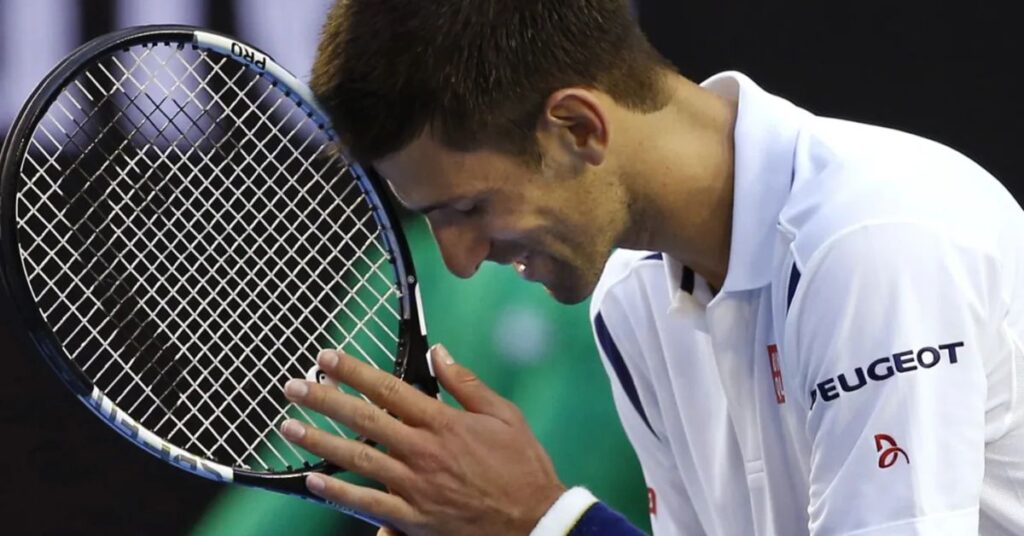

The Australian Open has witnessed countless legendary performances, but few matches in tennis history are as puzzling, dramatic, and revealing as the one where Novak Djokovic committed nearly 100 unforced errors—and still walked away as the winner.
In a sport where even 40–50 unforced errors are often enough to spell defeat, Djokovic’s victory defied conventional tennis logic. It was a match that showcased not just physical endurance or technical skill, but the unmatched mental resilience, tactical adaptability, and competitive grit that define Djokovic as one of the greatest players the game has ever seen.
This extraordinary Australian Open encounter remains a case study in how champions win even on their worst days.
In this blog, we revisit that unforgettable match, examine how Djokovic survived despite an avalanche of errors, what it revealed about elite mentality, and why this performance is still discussed among tennis fans and analysts worldwide.
Australian Open: The Theatre of Djokovic’s Greatest Tests
The Australian Open has long been Novak Djokovic’s fortress. Melbourne Park is where he has:
- Won a record number of titles
- Played through injury and adversity
- Delivered some of the most mentally draining matches in tennis history
Yet, among his many Melbourne masterpieces, this match stands out not for perfection—but for imperfection managed brilliantly.
The Match That Defied Tennis Norms
On paper, the statistics from that match were alarming.
- Unforced errors: Close to 100
- Baseline inconsistency: Frequent
- Momentum swings: Constant
- Physical strain: Extreme
For most players, such numbers would lead to a straight-sets loss. For Djokovic, they became part of a grinding survival act.
And somehow, incredibly, he won.
Understanding Unforced Errors in Tennis
Before diving deeper, it’s important to understand why this statistic matters.
Unforced errors typically indicate:
- Poor shot selection
- Loss of timing
- Mental lapses
- Physical fatigue
At the Australian Open, where rallies can be long and conditions taxing, controlling errors is often the key to victory.
Which makes Djokovic’s win all the more extraordinary.
Why Djokovic Was Struggling That Day
Even the greatest players have off days, and Djokovic was no exception in this match.
Contributing Factors
- Heavy conditions slowing the court
- A relentless opponent forcing errors
- Long rallies testing patience
- Possible physical discomfort
From the opening set, it was clear Djokovic was not striking the ball cleanly.
An Opponent Who Refused to Blink
One reason the match spiralled into chaos was the opponent’s approach.
Djokovic was pushed into:
- Endless baseline exchanges
- Defensive scrambling
- Playing one extra shot again and again
Rather than gifting points, the opponent stayed solid, forcing Djokovic to take risks.
The result? Errors piled up—but so did pressure.
How Djokovic Stayed in the Match Mentally
The defining aspect of this performance was mental control.
Despite spraying balls wide and long, Djokovic:
- Never panicked
- Never rushed points unnecessarily
- Never abandoned his game plan
This is where champions separate themselves from the rest.
Djokovic’s Greatest Strength: Emotional Neutrality
While other players crumble under frustration, Djokovic excels at:
- Resetting between points
- Treating each rally as a new battle
- Remaining emotionally neutral
Even after committing error after error, his body language remained composed.
This mental discipline allowed him to outlast the chaos.
Winning Ugly: A Hallmark of Champions
Tennis history is filled with beautiful wins—but the greatest champions are defined by ugly victories.
This match became a textbook example of:
- Winning without rhythm
- Winning without confidence in strokes
- Winning purely through belief and resilience
Djokovic didn’t need to be brilliant—he needed to be relentless.
Fitness: Djokovic’s Invisible Weapon
As the match stretched on, fitness became a decisive factor.
Despite the errors, Djokovic:
- Covered the court tirelessly
- Chased down impossible balls
- Maintained intensity deep into the match
While his strokes faltered, his legs and lungs never did.
At the Australian Open, physical endurance often decides matches—and Djokovic had more left in the tank.
Tactical Adjustments That Kept Him Alive
Even on a bad day, Djokovic’s tactical brain remained sharp.
Key Adjustments
- Reduced risk on second serves
- Increased net clearance on groundstrokes
- Extended rallies to test the opponent’s patience
- Targeted safer cross-court patterns
These subtle changes prevented the match from slipping away.
The Opponent’s Missed Opportunity
While Djokovic struggled, the opponent had chances—plenty of them.
However:
- Break points went begging
- Big moments were not capitalised
- Pressure tightened the opponent’s arm
Against Djokovic, failing to seize control often proves fatal.
Why Djokovic Is the Hardest Player to Beat
This match highlighted a brutal truth for Djokovic’s rivals:
You don’t beat Djokovic just because he’s playing badly.
You must:
- Sustain pressure for hours
- Capitalise on every opening
- Stay mentally stronger longer than him
Few players can do that consistently.
The Role of Experience in Surviving Chaos
Djokovic’s experience at the Australian Open played a huge role.
He has:
- Played five-set epics
- Won finals while injured
- Overcome hostile crowds and brutal conditions
Compared to those challenges, one error-filled match was just another test.
When Statistics Lie
On paper, the match made no sense.
- Nearly 100 unforced errors
- Inconsistent serving
- Erratic baseline play
Yet Djokovic won because tennis is not decided by numbers alone—it is decided by who wins the most important points.
And Djokovic always does.
Clutch Moments That Turned the Match
Despite the errors, Djokovic delivered when it mattered:
- Saved crucial break points
- Raised his level in tie-breaks
- Won the longest rallies
These moments erased dozens of mistakes.
Australian Open Pressure Cooker
The Australian Open is uniquely demanding:
- Heat
- Physical rallies
- Emotional intensity
Djokovic’s ability to thrive under these conditions—even on bad days—has defined his Melbourne dominance.
A Psychological Blow to the Opponent
Losing to a struggling Djokovic is often worse than losing to a flawless one.
For the opponent, the realisation was crushing:
- “If I can’t beat him today, when can I?”
That psychological weight often ends matches before the final point.
What This Match Revealed About Djokovic’s Greatness
This wasn’t a highlight-reel victory.
It was something greater:
- A lesson in perseverance
- A masterclass in survival
- Proof that greatness is not about perfection
Djokovic showed that champions don’t need to play their best—they need to refuse to lose.
Fans’ Reaction: Shock and Awe
Fans and analysts were stunned.
Reactions ranged from:
- “This makes no sense”
- “Only Djokovic could do this”
- “The ultimate mental giant”
The match quickly became a talking point across tennis circles.
Comparison With Other Legends
Even among legends, such wins are rare.
Federer, Nadal, Sampras—all had ugly wins, but few have:
- Survived such a flood of errors
- Maintained belief throughout
- Turned chaos into victory
This match added another unique layer to Djokovic’s legacy.
Why This Match Is Still Remembered
Years later, the match is remembered not for its quality—but for its message.
It taught fans and players alike:
- You can win without confidence
- You can win without rhythm
- You can win by sheer will
That lesson transcends tennis.
A Blueprint for Mental Toughness
Coaches often reference matches like this to teach:
- Emotional control
- Problem-solving under pressure
- Resilience in adversity
It is a blueprint for mental toughness at the highest level.
Australian Open: Djokovic’s Ultimate Exam Ground
Melbourne has always brought out the extremes in Djokovic—his brilliance and his resilience.
This match reinforced why:
- The Australian Open is his strongest Slam
- His mental edge grows with adversity
- His belief system is unbreakable
Why Opponents Fear Djokovic Even More After Matches Like This
Matches like this create an aura.
Opponents know:
- Even Djokovic’s worst tennis can beat them
- Momentum means little against him
- The match is never over
That psychological edge wins him matches before the first serve.
Winning Is a Habit, Not a Performance
For Djokovic, winning is not about how he plays—it’s about what he refuses to accept.
He refuses to accept:
- Defeat
- Mental collapse
- Loss of belief
That mindset carried him through this chaotic Australian Open battle.
Final Thoughts: When Greatness Is Defined by Survival
The match where Novak Djokovic made nearly 100 unforced errors and still won at the Australian Open is one of the clearest demonstrations of why he stands among the greatest athletes in sporting history.
It was not beautiful.
It was not dominant.
It was not flawless.
But it was unbreakable.
On a day when his tennis deserted him, his mentality carried him across the finish line. And that, more than any trophy or statistic, explains why Novak Djokovic remains one of the most feared and respected competitors the game has ever known.